
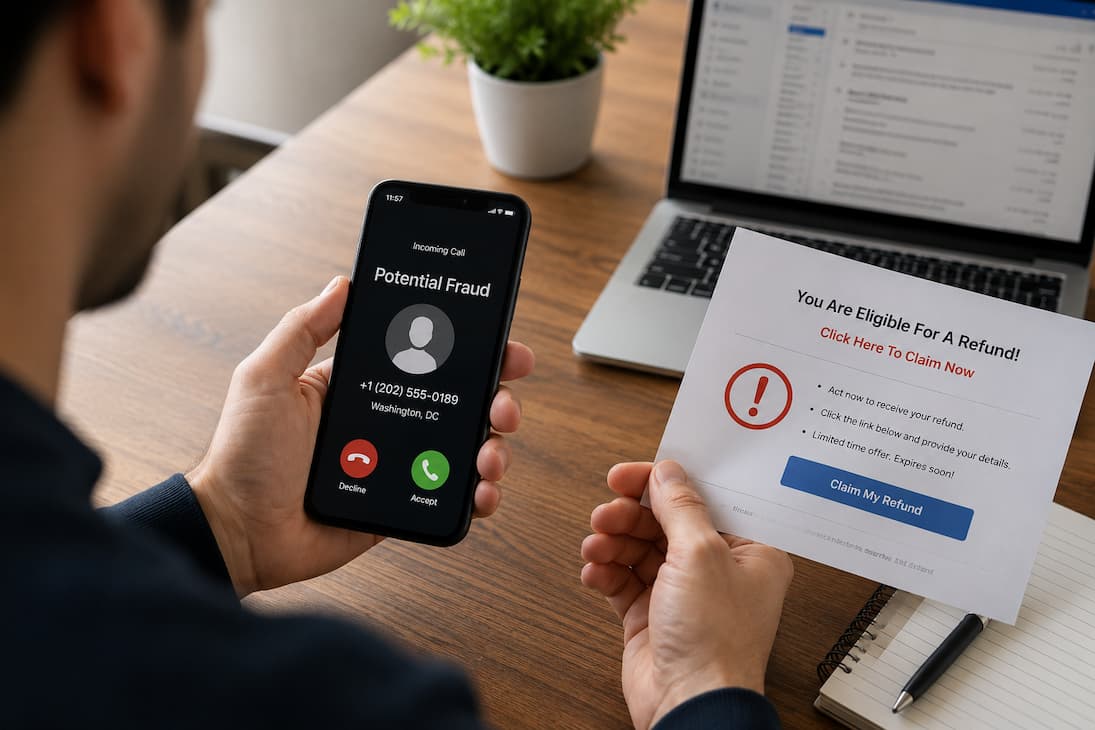
These scams take numerous shapes. An email may state a payment was processed twice and a refund is pending. An SMS message may claim a parcel was returned and require a refund. Callers posing as bank employees may indicate suspicious transactions are being reversed. The details vary, but the general strategy is to justify a refund and lead you to a risky action.
A legitimate refund follows a transaction or service relationship you can verify. An unexpected return should be handled carefully if you never bought the product, terminated the service, or contacted the organization. This does not guarantee it is a hoax, but it is a good reason to verify the claim before acting.
Refund Scams Work Well Because
Normal human emotions help refund schemes flourish. When money is available, people may focus on receiving it rather than questioning the process. A scammer may also threaten to expire a refund or terminate an account if nothing is done.
People often have several genuine transactions, which helps these schemes. Each month, you may have many subscriptions, online purchases, delivery orders, or bank payments. Therefore, a refund notice may seem convincing even if you don’t remember the transaction.
Scammers know that minor details build confidence. They may use a real firm name, mimic website branding, or disclose account-related information. Message appearance does not prove it came from the organization it purports to represent. Claims should be separated from actions for safety. First, “Is this refund real?” Ask, “What is the safest way to check?” Avoid letting the caller answer both questions. Use contact information from an official website, statement, or trusted app.
Unexpected Refund You Did Not Request
Receiving a refund notification when you don’t expect one is a red flag. A store may reimburse £450 to your card by email even though you have not returned anything. Your internet provider may have unintentionally overcharged you and want the difference back.
Pay attention to unexpected reimbursements since scammers use them as an entrance. Once you believe money is coming, the scammer can proceed. The request may be to “confirm” your identification, enter a one-time security code, or click a link. Before acting, examine your records. Check recent purchases, bank statements, receipts, and subscriptions. If there is no matching transaction, do not assume the refund is real because it contains your name or other personal information.
| Situation | Safer Response |
|---|---|
| You expected a refund from a retailer | Check the order and refund status through the retailer’s official website or app. |
| You received an unexpected refund message | Do not click the message link. Contact the organization independently. |
| A caller says your bank owes you money | End the call and contact your bank using a trusted number. |
| You are asked to pay a fee to unlock a refund | Stop and verify the request. This is a major warning sign. |
Urgency and Pressure to Act Immediately
Legitimate organizations may have deadlines, but scammers often use extreme urgency to prevent you from thinking clearly. A suspicious refund message might say you have only 15 minutes to claim your money, your account will be permanently closed, or the refund will be cancelled if you do not respond immediately.
Pressure is particularly concerning when it comes with a request for sensitive information or money. The combination is more important than either sign on its own. A scammer wants you to feel that delaying the decision will cause you to lose an opportunity.
Common pressure phrases
- “You must act today.”
- “Your refund will expire within the hour.”
- “Do not contact customer support.”
- “Stay on the phone while you complete the process.”
- “This is your final warning.”
When you feel rushed, pause. A genuine refund can normally be verified through an independent channel. Take time to check the transaction and contact the organization yourself. If someone becomes angry or threatening because you want to verify the claim, that behavior itself is a useful warning sign.
Requests for Sensitive Personal Information
Another major warning sign is a request for information that the organization should already have or does not need to process a refund. Scammers may ask for your full card number, card security code, online banking password, account PIN, or one-time authentication code.
People sometimes assume that sharing information is safe because the person claims to be helping them receive money. However, sensitive information can be used to access accounts or authorize transactions. A one-time security code, for example, may be intended to confirm a payment or login rather than a refund. Be especially careful with verification codes. If someone contacts you unexpectedly and asks you to read a code sent to your phone, do not assume that the code is harmless. Read the message itself. It may explain what action the code is actually authorizing.
Being Asked to Pay Before Receiving a Refund
A refund scam may reverse the normal flow of a transaction. Instead of simply returning money, the scammer says you must first pay a processing fee, release charge, verification payment, or tax. The explanation may sound official, but the request should be treated with caution.
There can be legitimate situations where fees are connected to financial services or international transactions, but an unexpected request from an unknown person is different. If you are told to send money before receiving a supposed refund, independently verify the organization and the exact reason for the payment. Be particularly cautious if the payment method is difficult to reverse or trace. Scammers may request bank transfers, cryptocurrency, gift cards, or other payment methods because once you send the money, it can be difficult to recover.
| Refund Request | Risk Level | What to Do |
|---|---|---|
| Refund processed through your original payment method | Usually lower | Confirm through your account or statement. |
| Small unexpected verification request | Needs checking | Contact the organization independently. |
| Send money before receiving your refund | High concern | Stop and verify before paying. |
| Pay using gift cards or cryptocurrency | Very high concern | Do not proceed without independent verification. |
Requests for Remote Computer or Phone Access
Some refund scams become more serious when the scammer tries to gain access to your computer or mobile device. The scammer may claim that a technical problem prevents processing your refund and ask you to install remote-access software. Once access is granted, the scammer may be able to view your screen, manipulate applications, or attempt to access sensitive information. They may also use the session to create the appearance of a refund while actually moving money from your account.
Treat any caller who unexpectedly asks you to install software with caution. Do not install remote-access tools simply because someone claims they are needed to issue a refund. If you genuinely need technical support, contact the organization yourself through its official support channel and ask whether remote assistance is part of its normal process.
Warning: Never give an unexpected caller control of your computer or phone just to receive a refund.
Suspicious Contact Details and Fake Websites
A refund message may look official yet lead to a bogus website. Business colors, logos, typefaces, and layouts might be copied by scammers. The website may have a login page to collect your username and password. Check the web address before inputting information. Spelling, extra words, strange characters, or a non-company domain may indicate a suspect address. Avoid relying on the URL address alone. A professional domain does not guarantee a website’s legitimacy.
Avoiding the message link is safest. Open your browser, type the organization’s website, or utilize its app. Use those trusted details to check your account or contact support.
Suspicious Refund Messages
- The sender’s address doesn’t match the company.
- This message has strange spelling or grammar.
- The link leads away from the stated company.
- The notice requests security codes or passwords.
- This sender creates excessive urgency.
- No direct communication with the organization is advised.
One tiny error doesn’t usually indicate fraud. Genuine companies can miscommunicate. However, many warning indicators should make you pause and check before continuing.
Trick for Overpayment and Refund
Claim overpayment is another prevalent occurrence. Someone may argue you were overrefunded and must return the difference. Sometimes the fraudster sends money that appears to have arrived in your account and then demands you transfer part of it. The payment may seem legitimate, which can be perplexing. A transaction can be reversed, challenged, or reported as fraudulent. If you give money to the fraudster before the transaction is concluded, you may lose money.
Do not instantly return an unexpected refund payment based on a stranger’s instructions. Please write to your bank or payment provider using their official contact information and explain what happened. Get their advice on the right procedure. The main lesson is to not let others influence how you handle an unexpected payment. Please verify the transaction yourself before sending any money.
How to Verify a Refund Safely
When you receive a refund offer, the safest approach is to slow the process down and verify each part independently. You do not need advanced technical skills. A few simple checks can prevent many common mistakes.
- Think about the transaction. Ask whether you actually purchased something, cancelled a service, or requested a refund.
- Check your own records. Look at receipts, order histories, bank statements, and account notifications.
- Do not use the message link. Open the official website or app separately.
- Contact the organization independently. Use a phone number or support channel you obtained from a trusted source.
- Ask what information is actually required. A refund should not normally require your password or security code.
- Check your account directly. Look for the refund in your transaction history rather than trusting a screenshot or verbal claim.
For example, imagine you receive an email saying that a retailer owes you £120. Instead of clicking the button in the email, you go directly to the retailer’s official website. You log in and find no refund notification. You then contact customer support through the website and discover that no refund was issued. The email was fraudulent, and you avoided the scam simply by verifying the claim independently.
Best practice: Never verify a suspicious message using contact details supplied by the same message. Use a trusted source instead.
What to Do If You Responded to a Refund Scam
If you have already clicked a link, shared information, installed software, or sent money, do not panic. Acting quickly can reduce the potential damage. The correct response depends on what information or access you provided.
If you shared banking information
Contact your bank or payment provider immediately using a trusted contact method. Please explain what information you shared and follow their security advice. Monitor your account for unusual activity and consider changing relevant passwords, especially if the same password is used elsewhere.
If you shared a password
Change the password immediately using the genuine website or app. If you reused that password on other accounts, change those accounts as well. Enable multi-factor authentication where available.
If you shared a security code
Contact the relevant bank or service provider as soon as possible. Please explain exactly what happened. A security code may have been used to authorize an action, so the organization may need to secure your account.
If you installed remote-access software
Disconnect the device from the internet if you believe someone still has remote access. Remove the software only after considering whether you need professional technical assistance to assess the device. Change important passwords using a different, trusted device if possible.
If you sent money
Contact your bank or payment provider immediately. Explain that you believe the payment was fraudulent. The sooner the provider knows, the sooner it may be able to take appropriate action, although recovery is never guaranteed.
Keep records of messages, emails, phone numbers, payment details, and screenshots. These details may help your bank, payment provider, or relevant authorities understand what happened.
How to Reduce the Risk of Future Refund Scams
You cannot prevent every scam attempt, but you can make yourself a harder target. Start by developing a simple habit: unexpected financial messages should trigger verification rather than immediate action. Keep your devices, browsers, and security software updated. Use strong, unique passwords for important accounts and enable multi-factor authentication where possible. Regularly review bank and payment account activity so that unusual transactions are easier to notice.
It is also useful to organize your financial records. Keep receipts and order confirmations in a place where you can find them easily. When a refund message arrives, you can quickly check whether it matches something you actually purchased. Finally, talk to family members about common refund scams. Older relatives and people who are less comfortable with online banking may be targeted more often, but anyone can be affected. A shared family rule such as “we verify unexpected money requests before acting” can help everyone make safer decisions.
| Protective Habit | Why It Helps |
|---|---|
| Use unique passwords | Limits damage if one account is compromised. |
| Enable multi-factor authentication | Adds another layer of account protection. |
| Check transactions regularly | Makes unusual activity easier to spot. |
| Use official apps and websites | Reduces the risk of following fake links. |
| Pause before sending money | Creates time to verify suspicious requests. |
FAQs
1. Is it safe to disclose my bank info for a refund?
It varies by situation and organization. Some respectable companies may require payment data to refund, but verify the company and transaction beforehand. Beware if someone unexpectedly requests full card details, online banking credentials, passwords, PINs, or security codes. Refunds usually use the original payment method. If a refund request appears odd, contact the company via its website or app.
2. Why would a fraudster refund me?
The reimbursement is commonly a scam premise. Personal information, account credentials, payment details, or device access may be the genuine purpose. Scammers may exploit refund stories to get you to submit money first. Money sounds good, so people may relax. Treat unexpected refund proposals like any other unsolicited financial message: pause, verify the claim independently, and never let pressure substitute rigorous checking.
3. What if someone wants a refund fee?
Hold off on payment. Check the refund and the requester. Ask the company on its website or another credible source if the fee is real and why. Be careful when paying with gift cards, cryptocurrencies, or other hard-to-reverse methods. An unexpected request to send money before obtaining a refund is a red flag that needs independent verification.
4. What if the refund communication includes accurate personal information?
Correct personal information does not verify the message. Public sources or data exposure might give scammers names, email addresses, phone numbers, and other information. Using these nuances, they make their messages more compelling. Consider the message’s call to action. Stop and check the claim through the organization’s proper procedures if it seeks sensitive information, creates unusual urgency, or links you to a dubious website.
5. Can refund fraud victims recover their money back?
Payment type, time, and conditions determine recovery. If you were defrauded, tell your bank or payment provider immediately. Avoid waiting for the situation to improve. Record messages, transactions, and other evidence. No recovery technique is guaranteed, although reporting the occurrence soon may give the financial provider more time.
Conclusion
Fraudulent refund offers work because they combine a plausible story with urgency. The promise of money back may appear harmless, but it could be an attempt to steal account information, payment data, or device access or get you to send money. The best habit is slowing down. Consider whether you expected a return, review your records, and validate the claim through an official source you locate independently. Beware of requests for passwords, PINs, one-time codes, remote access, or upfront payment.
Remember this: never allow an unexpected refund offer to force you to make an irreversible decision. A few minutes of detail-checking can prevent a greater issue. Recognizing the warning signs and learning how to check a refund properly lets you handle real refunds with confidence and make typical scams harder to accomplish.
