
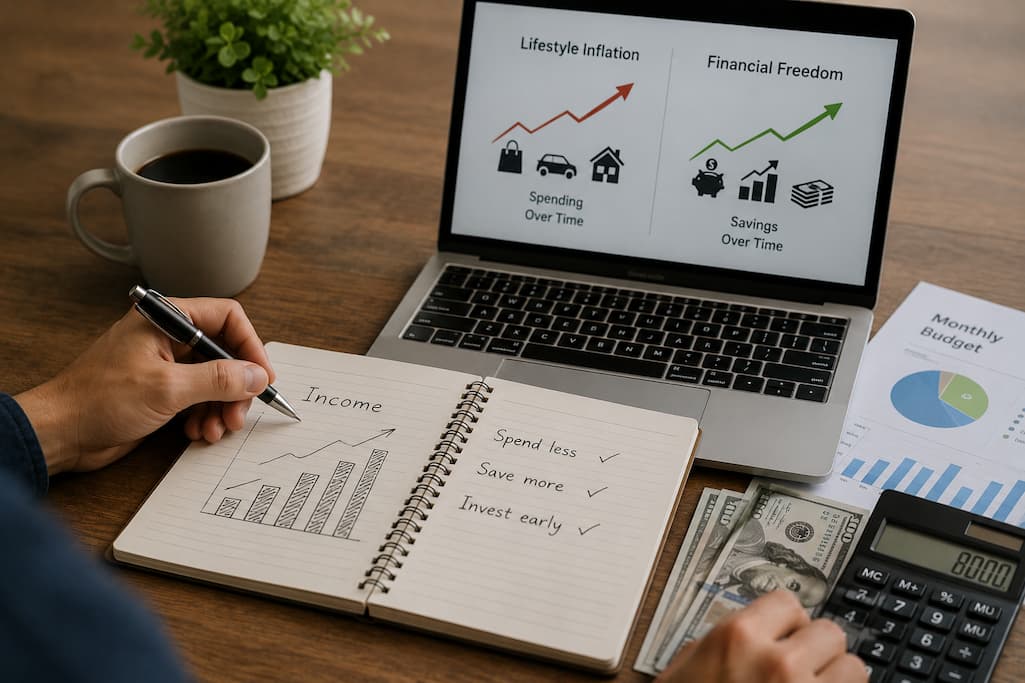
Lifestyle inflation typically occurs this way. Spending may not rise overnight. Instead, little updates become routine. A takeaway becomes a habit, a more expensive phone contract seems acceptable, and your comfy flat becomes too small. Individual choices may make sense. Both can permanently raise your lifestyle costs.
Some increased spending is beneficial. More money should mean more options. Making those selections intentional rather than instinctive is difficult. Understanding how lifestyle inflation affects monthly spending makes it simpler to enjoy life enhancements while maintaining savings, financial flexibility, and long-term goals.
Reality of Lifestyle Inflation
Income growth often causes lifestyle inflation, a progressive increase in spending. Accommodation, transportation, food, entertainment, and subscription costs can all rise. Spending more is not the answer. When higher expenditure becomes commonplace and hard to cut. Consider someone with a significant raise. Before the raise, they may have cooked most evenings, taken public transportation, and lived in a modest flat. They move somewhere pricier, order food many times a week, and update their car after the rise. Not all of these options are irresponsible. The difficulty arises when new expenses consume most of the extra revenue.
Because of their lifestyle change, they may feel better. Their financial situation may not have improved as much. The increased money went to regular costs rather than savings or flexibility. This phenomenon makes lifestyle inflation hard to spot. Spending doesn’t always feel extravagant. It feels natural because you’ve gotten used to it.
Why Minor Upgrades Cost Permanently
Human brains adjust quickly to comfort enhancements. Luxury purchases might become routine. After that, returning to your regular lifestyle may feel like a sacrifice, even if it was bearable. Consider food spending. You may have bought or made lunch in a grocery. After earning more, you buy café lunches to save time. Individual costs may appear insignificant. Five lunches a week becomes a monthly expenditure.
Similar things can happen with entertainment. Three streaming accounts from one. A basic gym membership becomes premium. Taxis are more handy than public transportation, so occasional trips become normal. Each change may seem minor, but recurrent expenses are potent since they don’t require a fresh decision. It’s crucial to distinguish between one-time upgrades and permanent commitments. Extra holiday spending is transient. Rent, auto payments, and subscriptions raise your cost of living.
Housing Accelerates Lifestyle Inflation Faster than Other Things
Housing is influential because it creates large, recurrent commitments. Moving to a more expensive property may seem natural when income improves. You may want a better location, more bedrooms, a larger kitchen, or newer amenities. There’s nothing wrong with house improvements. When rising housing expenses drain savings, financial stability is at jeopardy. Rent or mortgage increases are not the sole costs. A larger home may cost more in electricity, council tax, insurance, upkeep, and furnishings.
Thus, a home renovation should be regarded as a monthly commitment rather than just comparing rent or mortgage costs. A property that costs £400 more per month may seem acceptable compared to a higher salary, but additional fees may make the true increase much larger. Housing decisions are also difficult to change. Subscription cancellation is simple. House moving isn’t. Check if the extra room or location improves your life enough to justify the long-term investment.
Convenience Spending is Often Hidden
Convenience costs are a subtle form of lifestyle inflation. As your income rises, time may seem more valuable, making it sensible to spend money to save it. The concern is that convenience can spread to areas you previously managed without it. Try occasional food delivery after a busy day. Delivery becomes your go-to when you don’t want to cook. You may pay for premium delivery, grocery delivery, cleaning, or regular taxis. These services can be worthwhile if they alleviate stress or save time. They can quietly add up to a substantial monthly expense.
Just “Can I afford this expense?” is not useful. Ask instead, “Is this convenience worth the amount I spend on it every month?” That slight mental shift distinguishes intentional from automatic spending. Opportunity cost is another issue. Spending £200 more on conveniences each month prevents you from creating an emergency savings, paying off debt, or investing. Individual purchases aren’t the issue. The aggregation of purchases prohibits it.
Lifestyle Inflation vs Meaningful Lifestyle Improvement
Not every increase in spending is lifestyle inflation. Spending more sometimes enhances life. A worker can cut commuting time by moving closer. Another may buy healthier food, a safer car, or hobby-related gear. The issue is intent. You choose lifestyle improvements because they add value. Spending more because you earned more causes lifestyle inflation.
Consider a scenario if your income remained constant. Is the upgrading still worthwhile? If so, the expense may be justified. No may be an instinctual response to additional money. Check if the expense provides ongoing value. A nicer home can improve life for years. Regular impulse purchases that go unnoticed after a few days may not be as beneficial. Enjoy your money, not avoid iThe goal is to spend more wisely so that any increase inore income improves lives rather than just increases costs.
How to Avoid Lifestyle Inflation
When your income changes, lifestyle inflation is easiest to control. Before spending more, decide where it should go. Savings, debt repayment, long-term investments, and lifestyle improvements are all options. This process needs no sophisticated financial system. Making the decision before the additional money becomes your typical spending habit is crucial. Automatic transfers help because they direct money to your goals before it’s available for daily expenditures.
Regularly reviewing reoccurring expenses is helpful. Consider housing, transportation, insurance, subscriptions, memberships, and convenience spending. These categories need attention because they can keep raising your monthly bills without much effort. A “lifestyle ceiling” is another option. You don’t have to freeze your spending indefinitely. It involves determining which sections to upgrade and which to stay stable. For instance, you may spend more on trips while controlling your phone, transportation, and food costs. For rising income, this provides a destination. Without a strategy, extra money frequently goes to whatever spending habits grow first.
A Simple Way to Audit Your Monthly Spending
If you suspect lifestyle inflation has crept into your finances, compare your current spending with your spending from a year or two ago. You do not need perfect records. Bank statements and account summaries can usually reveal the major changes. Look for recurring expenses that did not exist previously. Then identify categories where spending has increased gradually. Pay particular attention to expenses that now feel essential but were once occasional luxuries.
| Spending Area | What to Look For | Useful Question |
|---|---|---|
| Housing | Higher rent, mortgage and associated costs | Has the upgrade improved daily life enough to justify the ongoing cost? |
| Transport | More expensive car payments, taxis or fuel | Is the extra cost buying meaningful convenience or simply becoming routine? |
| Food | More takeaways, restaurants and delivery | Which meals are genuinely worth paying more for? |
| Subscriptions | Services added over time | Which ones do I actively use every month? |
| Shopping | More frequent upgrades and impulse purchases | Am I buying because I need something or because I can now afford it? |
The goal of this exercise is not to eliminate every unnecessary expense. It is to discover where your money is going and decide whether the spending still reflects your priorities.
What to Do When You Make More
A pay raise is an opportunity, but it doesn’t have to mean upgrading your lifestyle. Allow time to decide what the extra money should do before making substantial adjustments. The increase may be used to boost emergency savings, pay off high-cost debt, invest more, or create a fund for meaningful experiences. You can upgrade your lifestyle, but you choose to rather than let it happen to you.
It can be used to set income growth rules. You could decide that part of every wage raise will improve your lifestyle, while part will boost your finances. An exact divide is personal. Having a method that prevents any rise from becoming a new regular expense is crucial. This strategy eventually gives you the freedom to earn more without getting dependent on it. This flexibility might be important during career changes, unanticipated expenses, and income drops.
Conclusion
One risky act rarely causes lifestyle inflation. It frequently involves dozens of plausible alternatives that raise daily costs. Better housing, transportation, food, and entertainment can be desirable. Making sure that improvements are purposeful rather than automatic because your income permits them is difficult. It’s best not to avoid spending or feel guilty about earning more. Linking revenues to priorities is important. When your income improves, spend part of it to better your life, but give the remainder a purpose before it becomes part of your monthly routine.
Income is not the only indicator of financial success. How much income is available for the future also affects it. Lifestyle inflation can be managed more intentionally, making a bigger income more likely to provide financial freedom rather than just more monthly demands.
FAQs
1. Lifestyle inflation: Is it really so bad?
Nope. It’s totally normal to spend more when you make more. The difficulty is when consumption increases automatically and there’s not much money left over for saving, financial stability, or other critical goals. Spending more money without restraint is not the same as making conscious changes in your lifestyle.
2. What is the biggest cause of lifestyle inflation?
There isn’t one single reason, but housing, transportation, and regular convenience costs can be especially impactful because they generate persistent monthly commitments. When you have a lot of small, regular costs, they can add up to a big total, too.
3. How can you tell whether you’re suffering from lifestyle inflation?
Now calculate what you are spending monthly and compare it to what you were spending before your income increased. Your salary may have increased significantly, but if your savings rate has stayed the same and your monthly budget is still tight, your lifestyle may have grown as fast as your income.
4. Should I save my whole salary rise?
Not always. A balanced approach may let you improve your lifestyle while also increasing your financial position. The key is to plan ahead of how you would like to utilize the additional revenue rather than have it automatically get rolled into regular bills.
5. Is there a way to stop lifestyle inflation?
Yes. Though it may take time to reduce recurring costs. Begin by pinpointing your biggest recurring expenses and your least useful spending. Focus on making big cuts to monthly commitments, not trying to eliminate every little pleasure.
