
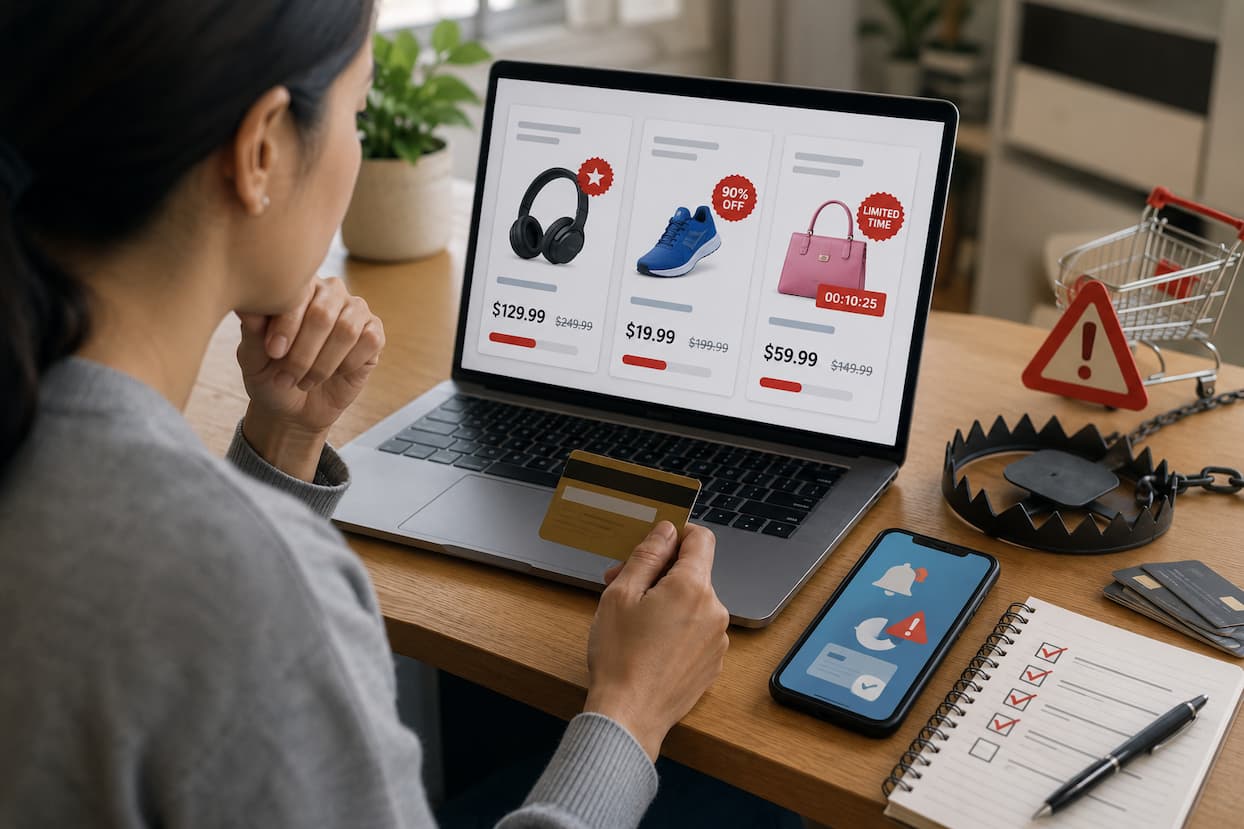
Start with Final Price, Not Advertised Discount
One of the easiest ways to make an offer appealing is to emphasize the discount rather than the price. “50% off” sounds great, but it doesn’t inform you if the price is fair. Suppose a product drops from £100 to £50. Not only saving £50 but also doing so is essential. Ask yourself if you wanted the product, if £50 fits your budget, and if it’s cheaper elsewhere.
Discounts can also be presented differently. A retailer may offer a percentage discount, a fixed amount off, bundle pricing, or a voucher with a minimum spending requirement. Each method can improve a transaction but costs differently. Please check the exact amount that will leave your account before making a decision. If you add delivery, service, taxes, or other obligatory costs later, the headline price may not reflect the total cost. Consider, “If this product were simply listed at the final price without the discount, would I still want to buy it?”
Beware Artificial Urgency
Online sellers utilize urgency to promote speedy purchases. You may notice alerts like “Only 2 left,” “Sale ends tonight,” or “Offer expires in 10 minutes.” These alerts sometimes indicate stock or time constraints. Other times, urgency is exploited to dissuade comparison shopping. Pay attention to countdown timers. If the countdown runs out and the identical offer starts again, the notification probably didn’t indicate the chance was about to end.
Pause is the safest urgency reaction. Ask yourself if you planned to buy the item or if the countdown inspired you. Real scarcity exists, but pressure should not substitute smart decision-making. If a purchase is worthwhile, checking the price, terms, and options is wise.
Know the Difference Between Deal and Marketing Technique
Not all promotional messages are untrustworthy. Businesses naturally entice customers with discounts, seasonal specials, loyalty programs, and limited promotions. The challenge is recognizing when an offer’s presentation influences your decision more than its worth. Consider “Buy two, get one free” instead of “three items for the price of two.” Both descriptions can mean the same thing. The first version may make you buy more than expected. Similarly, “Spend £50 and save £10” can help if you planned to spend £50. Spending £30 more to get the discount may be a bad deal.
| Offer Type | Question to Ask |
|---|---|
| Percentage discount | What is the final price, and is it competitive? |
| Minimum-spend discount | Would I spend this amount without the promotion? |
| Bundle deal | Do I really need everything in the bundle? |
| Countdown sale | Is the deadline genuine or repeated? |
| Free delivery threshold | Am I buying extra items just to avoid postage? |
Look Closely at “From” and Reference Prices
Online offers may compare prices to show savings. A product listed at £80 may have previously cost £120. The stated saving may seem large, but the reference price may not reflect the product’s typical selling price.
Consider the current selling price across numerous retailers when assessing a deal, not just one website. A product “reduced” to £80 may be sold elsewhere for £70 without a label. This is crucial for often discounted products. A “special price” that appears throughout the year may be the regular price on sale. The lesson is to compare the actual pricing, not simply the stated savings.
Read the Small Print Before Accepting an Offer
The main promotion often hides important conditions. Discounts often apply only to new customers, products, first purchases, or payment methods. Other constraints may include minimum spending, automatic renewal, cancellation deadlines, delivery limits, or account registration.
You don’t need to read every webpage before buying a £5 item. Read the fine print when a deal involves a membership, financial commitment, ongoing payment, or complicated discount. Search for “recurring,” “renews automatically,” “per month,” “after the trial,” “minimum term,” and “cancellation.” The terms explain what occurs following the tempting introductory offer.
Free Trials can Become Subscriptions
Free trials are a frequent approach to promote subscription services. They can be beneficial while testing a service, but they’re easy to forget. A trial may demand initial payment. If you don’t cancel before the trial finishes, the provider may charge you.
The issue may not be automatic renewal. Several genuine services explain this model. Customers who sign up without knowing the renewal date or price are at risk. Before starting a free trial, learn when it ends, how much the membership will cost, and how to cancel. If you’re unsure, mark the renewal date on your calendar. If you start an unconfirmed free trial, be sure to set a reminder a few days before it ends. Avoid remembering it months later.
Beware Subscription Traps
A subscription trap occurs when a customer signs up for recurring payments without comprehending the commitment. The initial offer may be cheap, significantly reduced, or a trial, but the ongoing payments can be ignored. Before subscribing, confirm billing frequency. A minor amount like “£9.99” can be charged weekly, monthly, or annually. Differences can be significant.
Check for automatic subscription renewal. If so, find out how to cancel and whether it stops future payments immediately or only the next renewal. Be careful when a website makes cancelation hard to find. A legitimate service may have a difficult cancellation process to keep consumers from canceling.
One-time & Recurring Payments
Be sure you understand what you’re buying before you pay. One-time purchases should only incur one charge, while subscriptions incur multiple payments. Sometimes the main offer obscures the distinction. A service may advertise a low first month and downplay the recurring expense. A goods website may offer a membership club at checkout.
Slow down before clicking “Continue,” “Start Trial,” or “Get Started.” Please read the information around the button carefully. Confirm whether you’re making a one-time purchase or a recurring payment. Do not enter your payment information until you understand what you will be charged and when.
Avoid Checkout Add-Ons That May Influence Your Choice
Many websites offer extras at checkout. Extended warranties, premium delivery, insurance, memberships, and accessories are examples. Although useful, add-ons can boost the ultimate cost without being part of your strategy. Before you pay, please check your order and remove any items you did not select.
Focus on pre-selected boxes. An already checked box may add a service unless you uncheck it. Although website designs vary, the premise is the same: you should inspect the completed order instead of trusting that the checkout page matches your original goal.
Know When Personalization Affects Price
Online shopping platforms track location, transactions, preferences, and browsing behavior. This data can personalize ads and recommendations. It may affect which promotions you view. Such data does not mean every personalized offer is unfair or that pricing is covertly different for every customer. It’s helpful to know that online buying is often personalized.
When making a big purchase, compare prices from reliable sellers instead of assuming the first offer is the best. Examine the ultimate pricing, delivery, return policies, and obligations. A few minutes of comparison can be better than responding immediately to a personalized pitch for expensive products.
Simple Five-Question Offer Test
A compelling internet offer doesn’t require a sophisticated study. Ask five fundamental questions before buying.
- What is my total payment today?
- Will I be billed again?
- Is this product/service necessary?
- Can I find it cheaper elsewhere?
- What if I change my mind?
Often overlooked is the last question. Check return, refund, and cancellation policies before buying. A low price is less appealing if returning is hard or expensive. This brief test is important when an offer inspires urgency. It delays your decision to buy after seeing the promotion.
Track Subscriptions
Make a quick list of all your subscriptions. Offer streaming, software, cloud storage, memberships, apps, fitness, and other subscriptions. Record service name, payment amount, billing frequency, and renewal date. At least every few months, check if each subscription is still relevant.
Combining small monthly payments can add up. A few £5 or £10 subscriptions may not seem essential, but together they might add up to a significant annual outlay. Remind yourself without a bank statement. A distinct subscription list clarifies your continuing responsibilities.
Be Wary of Unusual Payment Offers
A legitimate promotion shouldn’t force you to overlook payment security. Be wary of offers that require unique payment methods, direct payment to an individual, or sensitive information that is not necessary for the purchase.
Before paying, be sure you’re on the right website and the payment mechanism matches your service. Be wary of unwanted texts, emails, and social media offers. A tempting price can make consumers ignore warning indications. Stop and investigate before paying if an offer looks much better than every other respectable merchant.
Unwanted Subscription: What to Do
If you discover an unwanted subscription, please cancel it as soon as possible. First, verify your account and service charges. Follow the official canceling process and save confirmation. Check your payment statements to see how long charges have been occurring. Contact the company through its official help channel if you think someone created the subscription without your authorization or the cancelation process failed.
If the problem persists, notify your bank or payment provider about disputed or unauthorized transactions. Save emails, receipts, and cancelation confirmations. Do not dismiss recurrent charges because each amount is modest. If ignored, unwanted subscriptions might last months.
Conclusion
Discounts and online deals might be valuable. Learning to separate the deal from its presentation is crucial. A huge % discount, countdown timer, or “free” trial should prompt you to do your research before buying.
Check the final price, options, and one-time or regular payment before accepting an offer. Watch out for automatic renewals, cancelation policies, minimum spending, and checkout add-ons. Keep track of your subscriptions to avoid missing modest payments.
Allow yourself to pause, most importantly. A few minutes to understand a valuable and credible offer should be no problem. Paying attention to the whole cost and future commitment might help you escape several price and subscription traps when shopping online.
FAQs
1. Are countdowns always scams?
Not necessarily. Some countdowns do indeed represent genuine promotions or temporary offers. However, they can also be used as a psychological tactic to encourage hasty decisions. Be wary of a sense of urgency if the same countdown starts repeatedly or if the offer remains valid after the expiration date. Genuine deals are worth considering after carefully checking prices and terms.
2. How can free trials turn into subscription traps?
Free trials can become problematic if they are automatically converted into paid subscriptions and the user forgets to cancel. Before starting a trial period, always check the trial period end date, subsequent prices, and the cancellation procedure. If you are unsure whether you want to continue, set a reminder in your calendar before the trial period expires.
3. Why do websites use offers with a limited validity period?
Offers with a limited validity period can encourage customers to make a quick decision. While genuine promotions may have an end date, a sense of urgency can also be used as a marketing tactic to shorten customers’ comparison time. When you see an offer with a limited validity period, ask yourself if you really wanted this product before you saw the offer. This helps distinguish between a genuine need and impulsive purchases made under pressure.
4. How do I avoid forgetting my subscriptions?
Keep track of your subscriptions, including price and renewal frequency. Review the list every few months and cancel services you no longer use. For free trial periods, set reminders before the renewal date. You can also regularly check your bank statements or pay your bills to see if you have forgotten any recurring charges.
5. What if I cannot cancel my subscription?
First, use the company’s official cancellation procedure and keep proof of your cancellation attempt. Check if you received a confirmation email. If the costs continue to accumulate, contact the company’s official customer service. If the problem persists, contact your bank or payment service provider for possible solutions. Keep payment receipts, emails, and proof of your cancellation attempt in case you need to explain the situation.
