
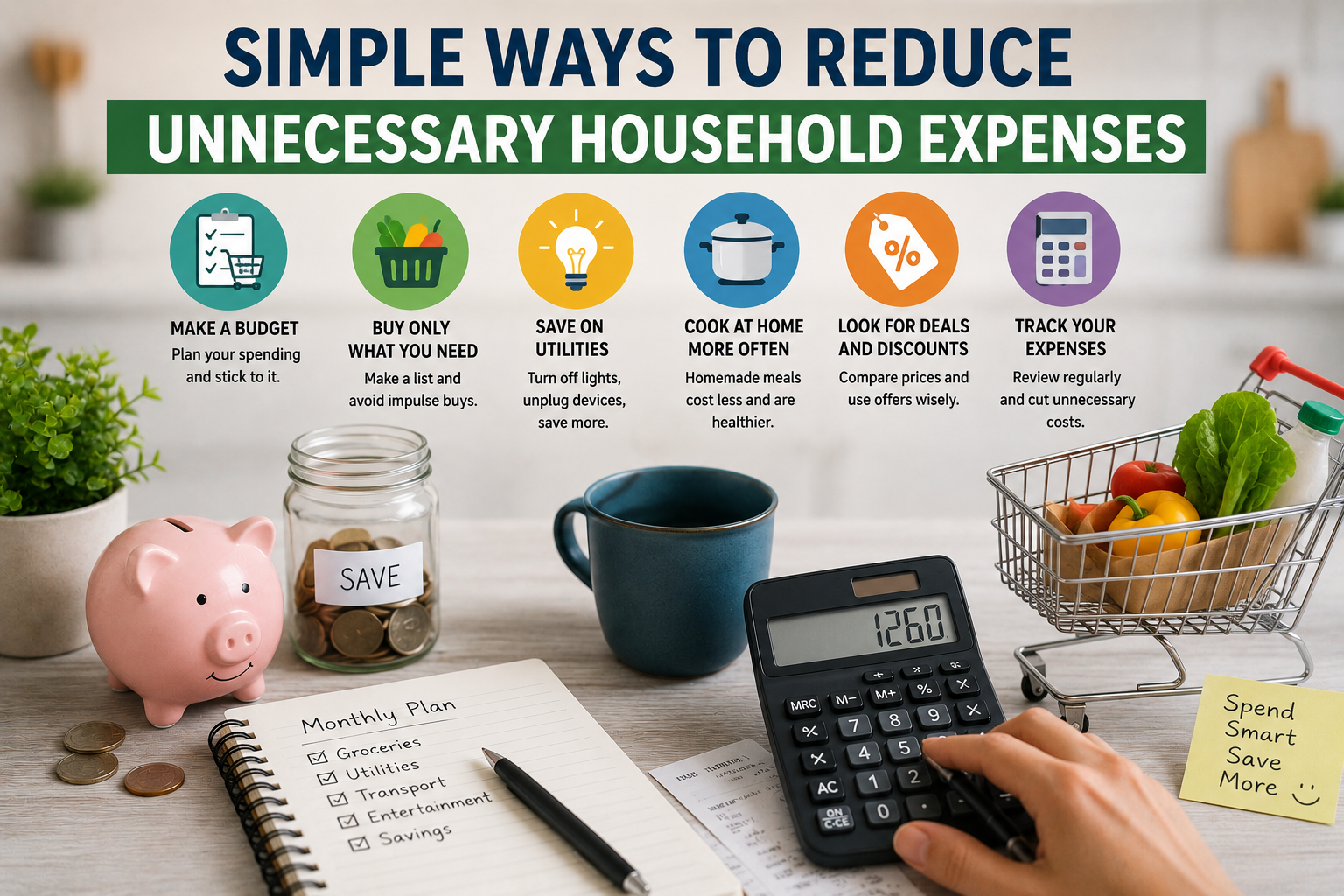
Families usually don’t suddenly find themselves in financial distress due to a major expense. It often starts subtly. For example, you might notice a slightly higher energy bill, more groceries than expected, a few seemingly insignificant online transactions, or subscriptions you forgot to pay for. Over time, these small expenses can put pressure on your monthly budget. I vividly remember the first time I experienced such a situation at home. Although the items themselves weren’t particularly expensive, at the end of the month I always wondered where all the money had gone.
Cutting unnecessary household expenses doesn’t mean you have to lead a life of scarcity or unhappiness. The key is to better understand the cash flows in your daily routines. Once you realize this truth, even small changes can lead to significant savings without having to drastically adjust your lifestyle. It’s not about stopping spending but about spending wisely and purposefully.
Discover what you Secretly Spend Money on Every Month
One of the main reasons why household budgets seem tight is that people spread out expenses and find it difficult to track them. You rarely see them all growing in one place, so they don’t seem that important. Energy bills, takeout meals, groceries, transport expenses, and various digital services all weave into our daily lives.
In many households, people waste electricity without noticing. Lights stay on in empty rooms, appliances stay plugged in when they aren’t needed, and older equipment uses more power than it should. Grocery costs can increase if you shop without knowing what you already have at home. Even small habits like regular tea, snacks, or unplanned purchases can accumulate and raise monthly expenses. The core issue is wasted money doesn’t stem from one big mistake but from a series of seemingly innocent small habits that, when combined, can turn out to be expensive.
Smarter Grocery Habits to Prevent Food Waste
One of the most common areas where households unknowingly overspend is the supermarket. Many people go to the supermarket without really knowing what they need, often impulsively or attracted by attractive packaging. This often leads to food waste at home, as some people throw away products before they expire.
It is perhaps more useful to have insight into your household’s actual weekly consumption. For example, many families buy vegetables or snacks “just in case,” even though they often throw these products away. The same was also the case in my kitchen: we bought too many perishable products, assuming we would cook often. Reducing this waste does not require extraordinary self-discipline. It simply requires the habit of checking what is in the kitchen before you go grocery shopping and planning meals in a simple and flexible way. Even a small improvement in grocery shopping can significantly lower monthly food costs and minimize unnecessary waste.
Managing Electricity at Home Simply
The electricity bill rises steadily, often as a result of our comfort habits. Running fans in empty rooms, leaving lights on during the day, unnecessarily charging electronic devices at night, or using energy-guzzling appliances without a plan all contribute to higher bills.
The beauty of energy conservation is that small behavioral changes can have a much greater impact than we think. Seemingly insignificant actions, like turning off unused lights or unplugging unused chargers, significantly reduce unnecessary monthly electricity consumption. Another common problem is the use of older, less efficient appliances that still function. These appliances often consume more electricity, usually without clear warning signs. The key is to use energy more consciously, without compromising on comfort. When this awareness becomes a habit, saving money becomes natural, not forced.
Reducing Water Waste and Hidden Costs in the Home
In daily life, we often view water as an inexhaustible resource, especially in homes with a stable water supply. Wasting water increases the water bill and leads to long-term maintenance problems that likewise require financial investments. Some seemingly simple habits, such as leaving the tap running while brushing your teeth, using a constant stream of water when washing dishes, or ignoring minor leaks, can all increase your water bill over time. Families often only realize there is a small leak in the house when the water bill skyrockets or damage to the home occurs.
I once visited a relative’s home: a small pipe under the sink leaked, but they ignored it for months because it didn’t seem dangerous. The leak caused the water bill to rise and damaged the wood of the kitchen cabinets. By the time it was repaired, everything had changed. This small delay turned an insignificant problem into an unnecessary expense. Paying attention to water consumption and addressing small problems early can help lower water bills and repair costs over time.
Avoid Impulsive Purchases and Develop Smarter Shopping Habits
It is not just the necessary items that become unnecessary household expenses. Much of it is due to impulsive purchases. These things are actually not needed; they are often bought because of discounts, advertisements, or emotions while shopping. This phenomenon is even more the case since the rise of online shopping. Products seem useful, prices seem low, and offers seem harmless. But these seemingly insignificant small actions, which occur over time, can lead to serious financial problems. losing.”
Waiting a moment before making non-essential purchases is a wise habit. By waiting a day or two before buying, you can often prevent overspending, as the impulse gradually diminishes. Usually, you will find that you don’t actually need the product. This does not mean that shopping isn’t fun but rather that you are buying consciously instead of on autopilot.
Reduce Infrequent Subscriptions and Digital Expenses
In today’s digital lifestyle, many households subscribe to services they rarely use. Streaming services, cloud storage, apps, premium memberships, and online tools often continue to charge monthly fees, even if you no longer use them frequently.
The problem is not the price of a single subscription but the accumulation of many seemingly insignificant costs. These costs are relatively small and easy to overlook. But when combined, monthly expenses can be quite high. By simply developing the habit of checking your digital payments once every few months, you can encounter surprises. People often find that they have subscribed to certain services, but they forget about or no longer use them. By cancelling a few of them, you can quickly lighten the financial burden on your monthly budget without disrupting your daily life.
Repair Instead of Replace
In modern households, people often choose to replace rather than repair, because replacing seems faster and easier. However, over time, this tendency can lead to significantly higher, unnecessary costs. Many items, such as furniture, appliances, clothing, or kitchenware, can actually be repaired for a fraction of the price of a new one.
For example, a slightly damaged appliance or a minor electrical fault does not necessarily need to be replaced. Often, a simple repair can extend its lifespan. The same principle applies to clothing and furniture, which can often be refurbished rather than thrown away. Human factors also play a role. If we replace items too quickly, we lose their value. Repairing instead of replacing gives us a sense of responsibility and makes us more conscious of the household budget.
Making Easy Family Routines That Will Naturally Reduce Expenses
It is much easier to save on household expenses if the whole family participates. Often, one person works hard to save money, while others maintain their old lifestyle. This creates imbalance and frustration. In many successful families, simple, shared habits have a significant effect. For example, turning off the lights when not in use, preventing food waste, discussing purchases before buying them together, and encouraging rational consumption all contribute to a healthy financial environment.
The beauty of this approach is that it does not feel restrictive but rather integrates seamlessly into daily life. Ultimately, everyone will naturally make wiser choices without constant reminders or rules.
Conclusion
Reducing excessive household spending does not require a radical lifestyle change or a strict budget; it simply requires awareness and healthy habits in daily life. As soon as you understand where your money is going—whether it involves groceries, energy bills, impulsive purchases, subscriptions, or unnecessary replacements—you will naturally make wiser decisions.
The beauty of this approach is that these seemingly small benefits accumulate over time. Turning off appliances when not in use, planning your grocery shopping more carefully, or checking subscriptions and repairing items instead of replacing them immediately—these seemingly insignificant actions can have a huge economic impact in the long run. Ultimately, financial security at home doesn’t always mean earning more money, but often it involves managing your existing resources more wisely and consciously.
FAQs
1. What is the easiest way to save money at home?
The easiest way is to keep track of a weekly budget. This helps you identify seemingly insignificant but recurring expenses so you can cut back on them without disrupting your lifestyle.
2. How can I save on groceries without compromising on food quality?
Make flexible meal plans before you go grocery shopping and take stock of your kitchen supplies. This helps prevent food waste and duplicate purchases while still ensuring you cook delicious meals.
3. Are small habits that save electricity really useful?
Yes, small habits like turning off the lights or unplugging appliances when not in use can help lower your monthly electricity bill.
4. Are subscriptions really a waste of money?
Yes, people pay for digital services they don’t use. Cancelling unnecessary subscriptions can immediately lower your monthly bill.
5. When is repair more cost-effective than replacement?
Generally, repair is cheaper. Before deciding to replace a product, it is wise to assess its condition and the repair costs to avoid unnecessary expenses.